In this guide · 7 sections
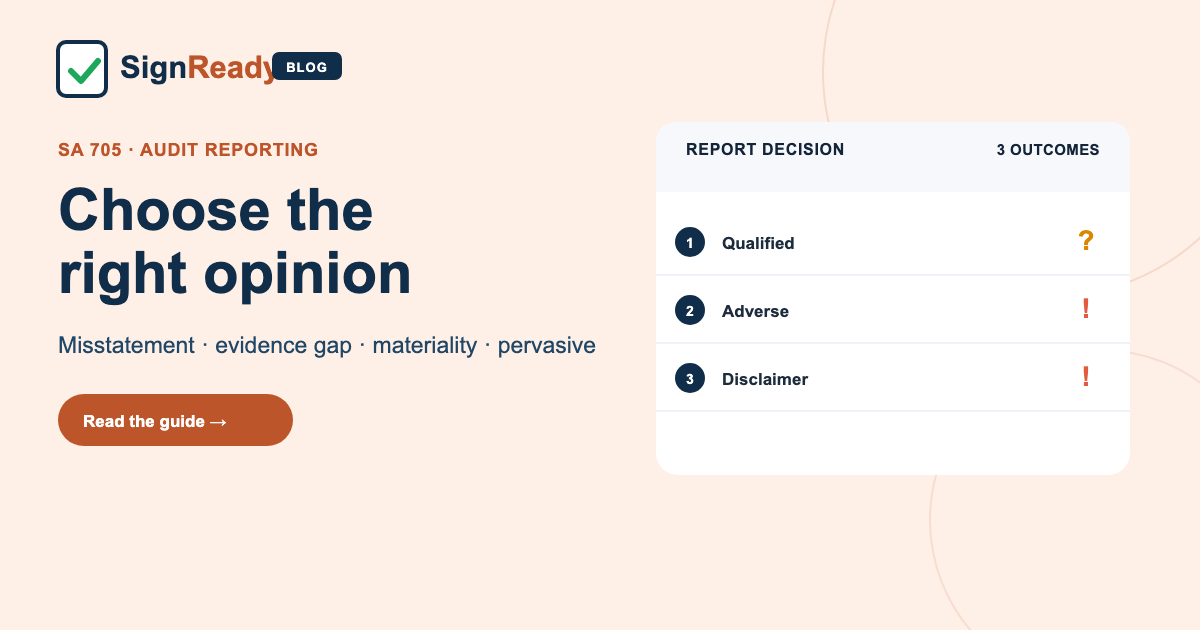
- A modified opinion is a reporting consequence, not a drafting choice. The route depends on whether the matter is a material misstatement or an inability to obtain sufficient appropriate audit evidence, and whether it is pervasive.
- Plan, perform, evidence and conclude are four separate parts of a defensible audit step.
- A clear working-paper reference and reviewer conclusion matter as much as the checklist tick.
Try SignReady: Keep the procedure, evidence and conclusion in one review-ready audit file.
Start freeA modified opinion is a reporting consequence, not a drafting choice. The route depends on whether the matter is a material misstatement or an inability to obtain sufficient appropriate audit evidence, and whether it is pervasive.
What the auditor needs to establish
Start with the audit objective and the assertion at risk. A good file lets a reviewer see the population or matter examined, why the procedure was selected, what evidence was obtained, exceptions found and the conclusion reached. The steps below are a practical framework; they must be tailored to the engagement, assessed risks and applicable reporting framework.
Use SignReady to keep the procedure, evidence, open query and partner conclusion together. Start with 3 finalisations free.
A practical procedure
- Identify the matter precisely: material misstatement, insufficient evidence, or an issue that instead requires emphasis/other-matter treatment.
- Assess materiality and pervasiveness. Pervasive effects are not confined to specific elements, represent a substantial proportion of the statements, or are fundamental to users’ understanding.
- Discuss the matter with management and those charged with governance, seek correction or additional evidence, and document the responses.
- Use the correct report structure and wording for qualified, adverse or disclaimer opinion; complete the required communications before signing.
How to document the work
| Record | What it should show |
|---|---|
| Purpose and risk | The assertion, population or issue being addressed and why the work is necessary for this client. |
| Work performed | Who performed it, date, population/selection where relevant, documents inspected and tests completed. |
| Evidence and exceptions | Working-paper references, copies or links to evidence, exceptions and follow-up. |
| Conclusion and review | A clear conclusion against the objective, effect on the financial statements/report, reviewer comments and closure. |
In SignReady, use the relevant programme area to attach the evidence, raise exceptions as review points and record the conclusion before final partner sign-off. That is a workflow benefit—not a substitute for professional judgement or the underlying procedures.
Common mistakes
- Using an emphasis-of-matter paragraph to avoid a qualified opinion.
- Treating every material matter as pervasive.
- Drafting the opinion before the evidence gap and communication are fully documented.
Final review questions
- Does the work respond to the specific risk, rather than a generic checklist?
- Could another experienced auditor understand what was tested and why?
- Are all exceptions resolved, quantified or carried into the final evaluation?
- Does the conclusion link to the financial statements or reporting decision?
Try SignReady: Give your reviewer the workpaper reference, conclusion and open points in one place.
Start freeFrequently asked questions
Can I use this as a standard audit checklist?
Use it as a starting framework only. Tailor the objective, procedures, selection and conclusion to the entity, assessed risks and applicable standards.
What makes a working paper review-ready?
It identifies the objective, work performed, evidence, exceptions, conclusion, preparer and reviewer. A tick without that trail is rarely enough.
Can SignReady replace professional judgement?
No. SignReady organises work, evidence, review points and finalisation. The auditor remains responsible for the audit procedures, conclusions and report.
Sources
SignReady brings your trial balance, working papers, review points and finalisation checks into the same client file. Start free — 3 finalisations.
Audit and accounts updates, practical tips and knowledge: join the Audit and Accounts Update group on WhatsApp.
Version history: 24 Nov 2026 — first published. This guide is part of SignReady's audit-procedures series. It links the audit objective, procedures, evidence and conclusion so the work can be reviewed properly.


